
Blog
Insights on South African labour law.
Practical South African labour-law guidance, case lessons and CCMA updates from 20 years at the coalface — disciplinary process, restructures, drafting and compliance.

How to Prepare for a CCMA Arbitration
If conciliation hasn't settled a dispute, the next step at the CCMA is arbitration — a formal, evidence-led hearing where a commissioner makes a binding decision. For employers, the result often comes down to one thing: preparation. Walking in unprepared is the single biggest reason employers lose cases they should have won. A practical guide to getting your documents, witnesses and evidence ready before the day.
Read more ›
Section 189 Explained: The Retrenchment Consultation Process
When a South African business needs to retrench for operational reasons, the law sets out a consultation process that must be followed before anyone is let go. This process — section 189 of the Labour Relations Act — is where most retrenchment disputes are won or lost. Here's what it means in plain terms: who you must consult, what the consultation must cover, and why good faith matters so much.
Read more ›
What Must Be in a South African Employment Contract
A written employment contract is one of the simplest protections a South African business can put in place — and one of the most commonly neglected. Every employee is entitled to written particulars of employment, and a clear, industry-appropriate contract heads off countless disputes before they start. Here's the checklist: the legal must-haves every contract needs, plus the clauses that actually protect your business.
Read more ›
Disciplinary Hearing Mistakes That Cost Employers at the CCMA
Most unfair-dismissal findings at the CCMA don't happen because the employer had no case — they happen because of avoidable mistakes in the disciplinary hearing. After chairing more than 800 inquiries, the same errors come up again and again: vague charges, too little notice, a partial chairperson, inconsistent treatment. Here are the mistakes that most often cost South African employers — and how to avoid each one.
Read more ›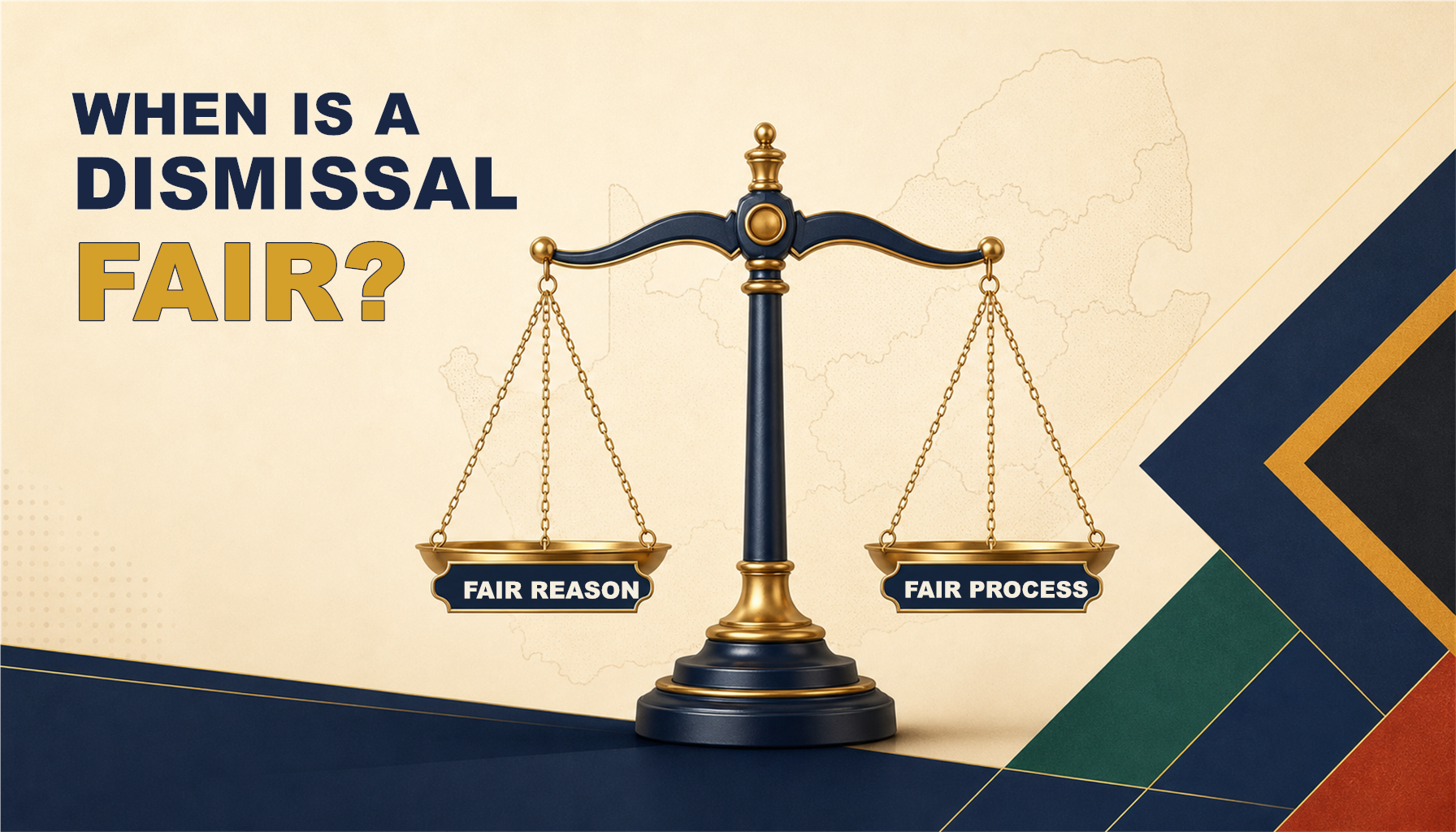
When Is a Dismissal Fair in South Africa?
Knowing when a dismissal is fair is the difference between parting ways cleanly and facing a costly claim at the CCMA. The law's test is stricter than many business owners expect: a fair dismissal needs both a good enough reason and a fair process — miss either and the dismissal can be found unfair, even when the employee was clearly in the wrong. A plain-English guide to the two halves of fairness and the three fair reasons to dismiss.
Read more ›
Ill-Health Incapacity vs Poor Performance: An Employer’s Guide
One of the most common and costly mistakes South African employers make is treating an incapacity matter as if it were misconduct. Incapacity is not about fault — it's about an employee who genuinely cannot do their job, through ill health or an inability to meet the standard. This guide explains how the two processes differ, what a fair ill-health and poor-performance process looks like, and why getting the distinction wrong lands employers at the CCMA.
Read more ›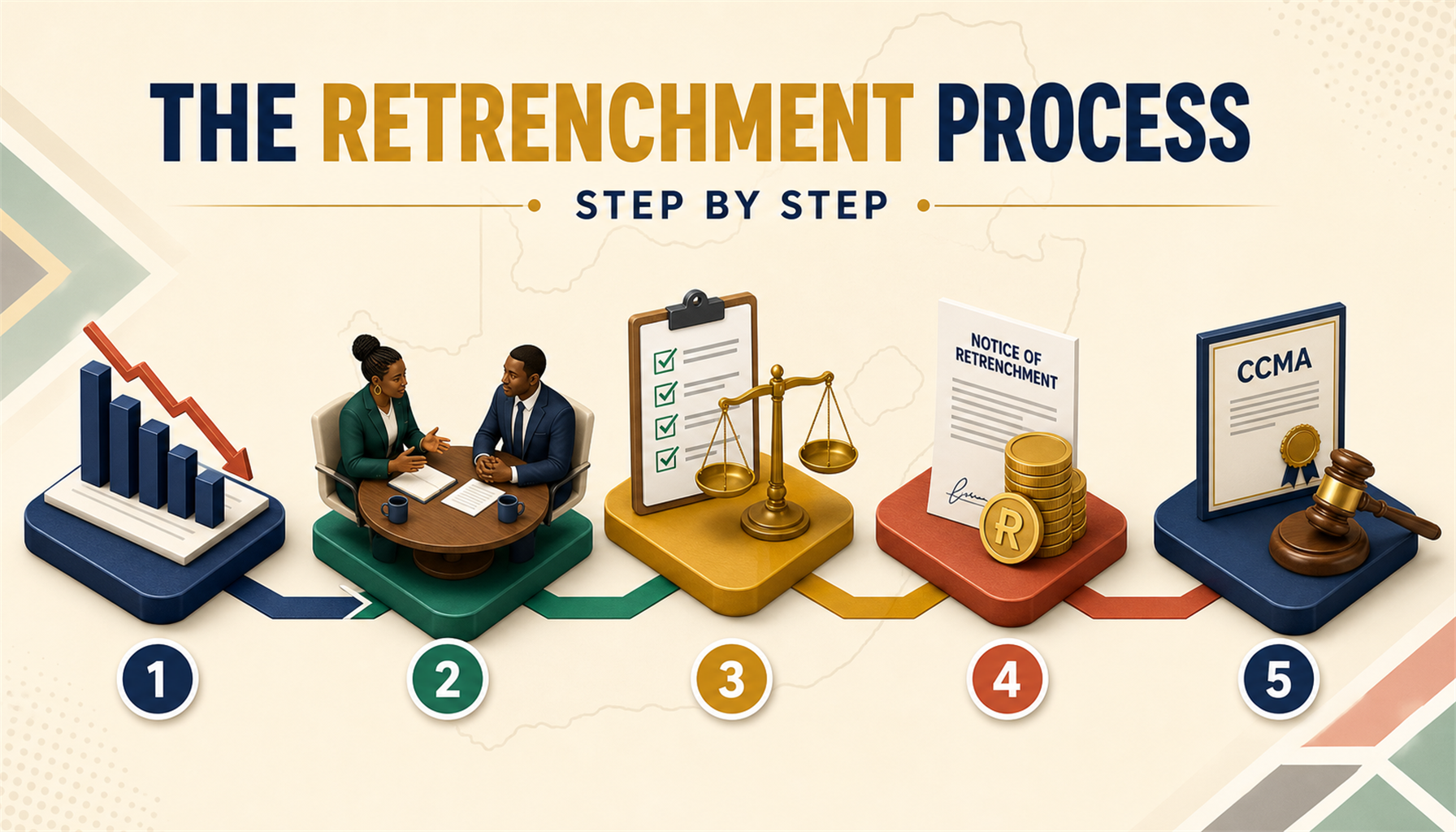
The Retrenchment Process in South Africa, Step by Step
Retrenchment is one of the hardest things a business has to do — and one of the most legally exposed. When the reasons are financial, emotions run high, and any employee who believes the process was unfair can take it to the CCMA. This step-by-step guide walks employers through a fair retrenchment: identifying the operational requirement, consulting in good faith, applying fair selection criteria, getting notice and severance right, and staying defensible if challenged.
Read more ›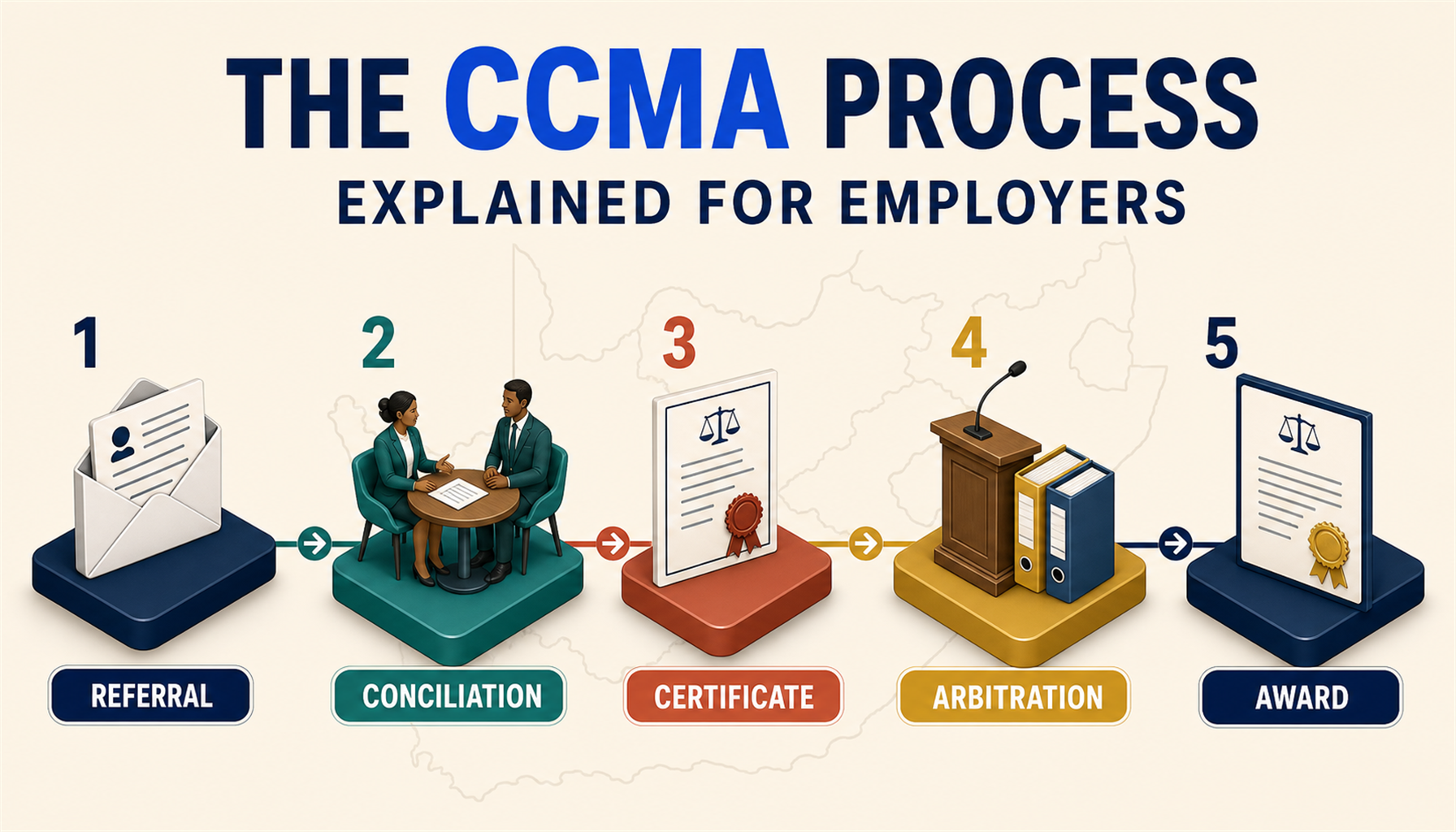
The CCMA Process Explained for Employers
For many South African employers, a letter from the CCMA is the first sign that a dismissal is being challenged — and the start of a process that can end in compensation or reinstatement if it's mishandled. Understanding the CCMA process before you're in it is the best way to protect your business. Here's how it works, step by step: referral, conciliation, certificate of outcome, arbitration and the binding award.
Read more ›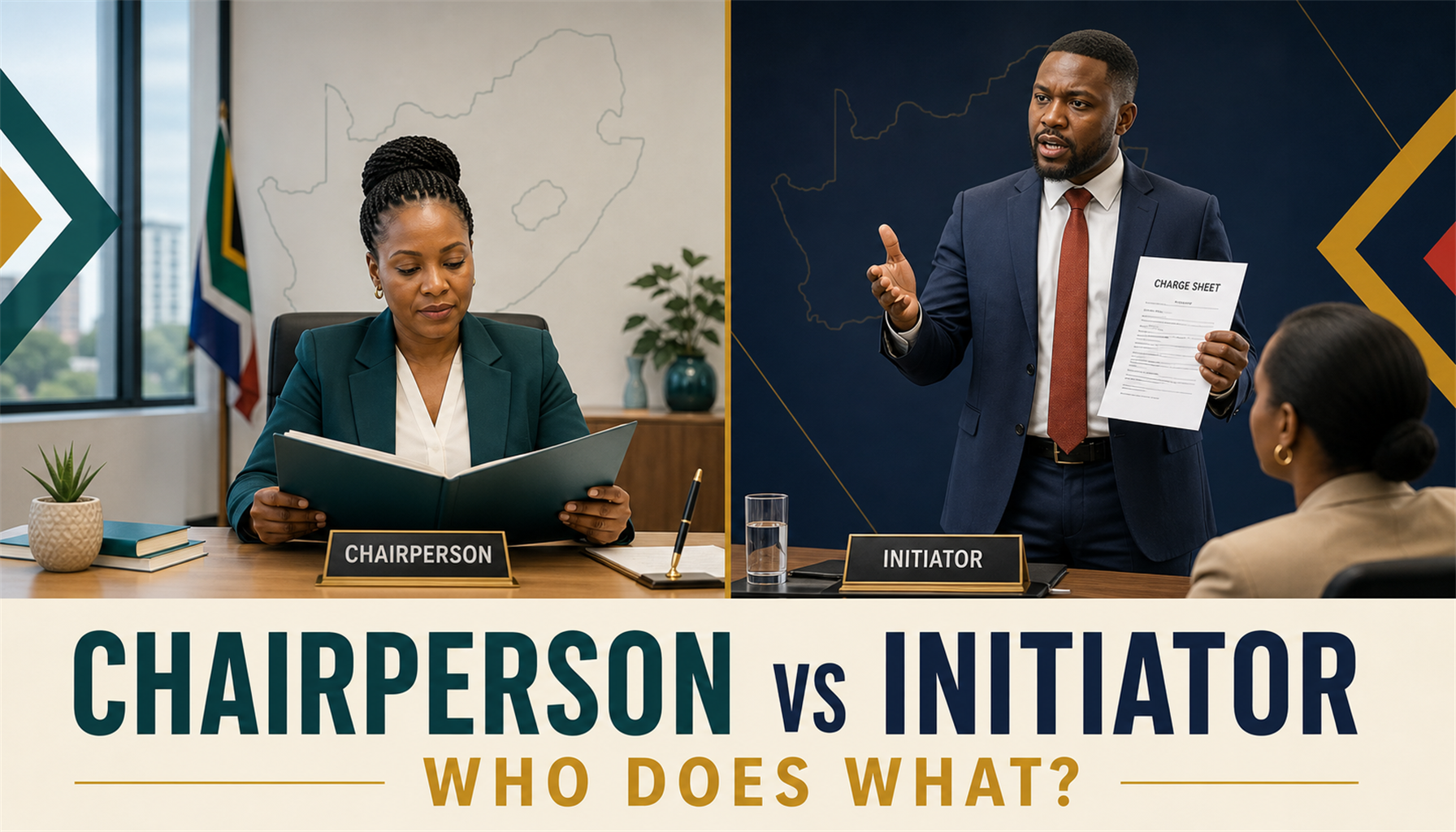
Chairperson vs Initiator in a Disciplinary Hearing: Who Does What
One of the most common reasons disciplinary hearings fall apart is a confusion of roles. When the same person investigates, presents the case and decides the outcome, the hearing looks — and often is — unfair. Understanding the difference between the chairperson and the initiator is fundamental to running a process that holds up: the initiator presents management's case, the chairperson decides impartially, and keeping the two separate is what protects your outcome at the CCMA.
Read more ›
How to Run a Disciplinary Hearing in South Africa: A Step-by-Step Guide
Knowing how to run a disciplinary hearing is one of the most important skills an employer or manager can have — and one of the easiest to get wrong. Get the process right and you can deal with misconduct fairly and confidently. Get it wrong and even a clearly guilty employee can have their dismissal overturned at the CCMA, costing your business compensation or reinstatement. This guide walks through the process step by step — from investigation and charges to the chairperson's decision.
Read more ›